Showing posts with label Comic Book Stuff. Show all posts

Friday, July 24, 2026

Top Ten Things: Christopher Nolan Films, RANKED

Welcome to another edition of Top Ten Things, here at Enuffa.com!


It's another bonus edition of TTT, as we have not ten but thirteen entries to discuss - time to rank Christopher Nolan's filmography!  I've been a Nolan fan since Memento's 2001 theatrical release, and over the past two-plus decades this cerebral English director has already compiled an extraordinary body of work, creating a singular brand of intelligent, crowd-pleasing blockbuster films.  Nolan's affinity for challenging, puzzle-like movies was apparent from the beginning, but he also reinvented the Batman franchise by grounding it in reality and making its protagonist a deeply flawed, real-world hero trying to redeem his broken city.  Nolan's films generally demand repeat viewings, keeping the viewer on their toes and often letting the editing drive the narrative so there's no cinematic fat on the bone.  Every new Christopher Nolan film is event viewing for me, guaranteed to present a story in a genre-defying way audiences have never seen before.

Here now are Christopher Nolan's films, ranked....


13. Following


Nolan's feature debut was this neo-noir with a non-linear narrative, about an aspiring writer who looks for inspiration by shadowing people he sees on the street.  He falls in with an experienced burglar and begins to make a habit of breaking into strangers' homes, stealing various items, and selling what he can.  Soon though he becomes romantically involved with one of his "victims," whom he learns is mixed up with a local mobster.  Meanwhile nothing he comes to believe about her or his mentor is what it seems.  Following was made for a paltry $6,000 and is thus quite rough around the edges, but already Christopher Nolan showed his gift for labyrinthine storylines and devilish plot twists, two things he'd execute much more assuredly in his second film, Memento.


12. Tenet


Perhaps Nolan's most Nolan-est film was this 2020 puzzle box loaded to the brim with so much exposition he himself seemed to have trouble conveying it all.  John David Washington stars as The Protagonist, a CIA agent tasked with stopping a time-inverting terrorist plot that will create backward-traveling entropy and unmake the world as we know it.  Got all that?  Nolan as usual stacks the film with talented, capable actors and creates some truly unique set pieces, such as staging a fistfight while one participant is traveling forward through time and the other is traveling backward.  And while Tenet provides an entertaining, James Bond-on-conceptual-steroids cinematic experience, sadly some of the plot details get lost in the translation (not helped by the audio mix, which buries crucial dialogue under thundering sound effects).  Still Tenet is yet another innovative spy thriller from a director who loves his puzzles.


11. Insomnia


Nolan's remake of the 1997 Swedish thriller of the same title, Insomnia stars Al Pacino as an aging LAPD detective assigned to a murder investigation in Alaska during the "midnight sun" season.  The Pacino character accidentally kills his partner during a shootout, after said partner has revealed he intends to testify against Pacino in an Internal Affairs case.  Complicating the matter is the at-large murderer (a superbly creepy Robin Williams), who witnessed the shooting and attempts to blackmail Pacino into pinning the murder on the victim's abusive boyfriend.  What follows is a fascinating moral dilemma, where the flawed protagonist must choose between saving himself or bringing a killer to justice.  Insomnia takes the suspense thriller genre and turns it upside down, throwing curve balls at the audience every step of the way.  Pacino and Williams have splendid chemistry together, and Nolan's direction lends this noirish thriller a modern edge.


10. Dunkirk


Nolan's streamlined, visceral account of this World War II rescue tells the story from three different points of view: the air, the sea, and the land.  The film intercuts between the three locales, expanding time in some instances and showing us some of the same events from multiple points of view.  There's little historical context presented, so the material depicted must speak for itself and create an immersive viewing experience.  For the most part this element works, though I would've liked to see more about who these characters were and what the battle itself meant in the grand scheme of WWII.  You'll need to do a little homework to fully appreciate what's happening.  Still Nolan and co. deftly handle the genre, presenting a gritty, palpably harrowing war film and adding yet another impressive entry to his resumé.


Friday, July 11, 2025

Movie Review: Superman (2025)


In the words with which New York Times critic Janet Maslin kicked off her 1982 review of Star Trek II: The Wrath of Khan, "Well that's more like it."

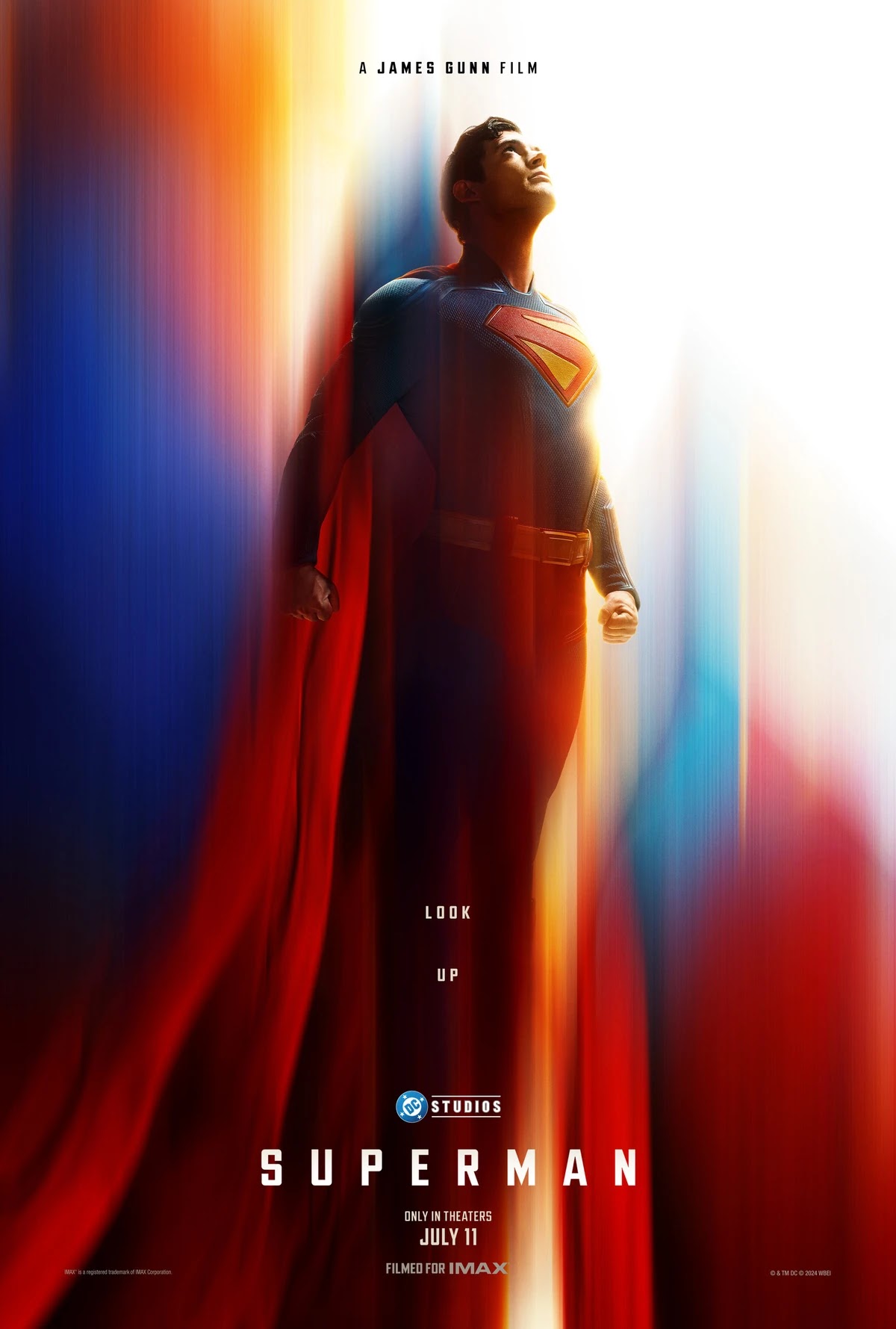
James Gunn's new Superman film is just the cinematic rebirth this character and his mythos needed after decades of failed reboots and reinventions, tacked-on latent sequels, and joyless, unpleasant "realistic" takes.  I've said for a long time that Superman is a simple character, but simultaneously a very easy one to screw up.  He needs to be a paragon of virtue and a symbol of hope, but also needs real human frailty and uncertainty to make him relatable to us screwed up mortals.  He needs to be nigh invincible but still vulnerable, both physically and especially emotionally.  Gunn and his collaborators have threaded this needle so deftly I found myself choking up at numerous points during this film.  Turns out there was a very simple but vital ingredient missing from Zack Snyder's dour Superman films: pathos.

Wednesday, August 14, 2024

Awesomely Shitty Movies: 300

Welcome to another edition of Enuffa.com's Awesomely Shitty Movies, where I pick apart a beloved cinematographical (is that a word?) feast and shatter its aura of watchability for everyone.  I'm probably overestimating my influence, but you get the idea.


Today I'll be dissecting the 2007 battle epic 300, directed by Zack Snyder and based on the graphic novel by Frank Miller.  300 recounts The Battle of Thermopylae, where the Spartan King Leonidas, along with 299 of his ruthlessly tough soldiers, stood against a massive Persian army led by King Xerxes.  And, well, that's it.  That's the entire plot of the film really.  In flashback we learn that, like all male Spartan children, Leonidas experienced a childhood of intentionally-inflicted cruelty designed to harden him, that he might one day be a great king and soldier.  There are also subplots involving a corrupt religious cult called the Ephors, who order Leonidas not to move against the Persians, plus one of the Spartan Council is revealed to be in Xerxes' back pocket.  Other than that though it's basically an extended two-hour battle sequence.

So what are the pros and cons of this Frank Miller-inspired film?  Let's take a look, because.....THIS! IS! ENUFFA!!!  See what I did there?


The Awesome

Visuals

Like Robert Rodriguez did with Sin City, Zack Snyder took Frank Miller's stunning comic book panels and recreated them for the screen, assembling an almost shot-for-shot adaptation that looks absolutely gorgeous.  The colors are almost exactly like the graphic novel, the characters have been brought to life in painstaking detail, and the action is stylized to reflect the over-the-top movements depicted in the book.  The film adaptations of both Sin City and 300 proved to be very influential in creating these impossible comic book worlds.  If you're going to make a CG-heavy film, this is how you do it.

Whatever the movie's flaws, this is a gorgeous shot.


Battle Scenes

As I said above, the combat is heavily stylized to echo Miller's drawings and give the characters and events a sort of mythic quality.  The blood and gore are turned way up as well, mimicking Miller's explicit visual approach.  It's a good thing the battle sequences work so well, because this film has a lot of them.  A LOT.


Costumes

Snyder has literally translated Miller's artwork in the costume department as well.  All the characters are dressed exactly like their two-dimensional counterparts, and they look great.


Effects & Makeup

There's a theme going on here - when it comes to the visual aspects of the film, everything is first-rate.  The special effects and makeup are no different.  Snyder uses CGI not as a substitute for reality, but as a way to heighten and distort reality.  The backgrounds are murky and flat, bathed in yellows and browns, just as Miller drew them.  The Spartans all have CG-enhanced six-pack builds and brandish perfect bronze shields.  But when practical effects were called for, Snyder used traditional prosthetics as well.  The Ephors are wart-covered and repulsive, the deformed Ephialtes is a grotesque hunchback, the Executioner is an enormous, clawed being resembling the Cenobites from Hellraiser.  The makeup and effects perfectly capture Miller's bizarrely-rendered characters.

Give that man a Baby Ruth!

Thursday, August 8, 2024

Awesomely Shitty Movies: Timecop

Welcome one and all to the fifth edition of Awesomely Shitty Movies, here at Enuffa.com!

Since last installment dealt with the Back to the Future sequels, I thought while we're on the subject of time travel movies, why not examine the tremendously entertaining but pretty terrible Jean-Claude Van Damme vehicle Timecop?
 

Timecop was released in 1994 and stars the aforementioned Van Damme as Max Walker, a police officer for the futuristic government agency known as the Time Enforcement Commission.  See time travel has been invented and predictably exploited by criminals for either financial gain or to alter the timeline to their advantage, necessitating the formation of the TEC.  Walker stumbles onto the case of Senator Aaron McComb (Ron Silver), who has become head of the Commission and is abusing his position by stealing money from the past to fund his future Presidential campaign.  What follows is a pretty intriguing-but-not-good sci-fi action thriller as Walker travels back and forth between 1994 and 2004 to thwart McComb's plot and retroactively prevent his own wife's murder at the hands of McComb's agents.

The movie was directed by Peter Hyams (who helmed the Sean Connery sci-fi western Outland, as well as the sequel to Stanley Kubrick's 2001) and is loosely based on a comic book story.

So let's take a look at what was good about this movie, and then we'll look at what wasn't.


The Awesome

Time Travel

As I said last time, I'm a sucker for time travel stories.  I find the whole concept fascinating and by using that as a backdrop there's instant sci-fi credibility in my book.  Of course it's also a very delicate line to walk, given how easily a plot-unraveling paradox can ruin the film.  But as long as the characters are interesting and the overall story works, one can forgive a certain degree of time-travel plot holes. 

In Timecop we see the villains traveling back to the Civil War era and the Great Depression to take advantage of lesser technology and a vulnerable economy, respectively, coming away with a fortune.  Even though these scenes were brief, I enjoyed seeing these different time periods depicted and found the thievery inventive.  We also see the main villain McComb interacting with his younger self to alter his own future, and we see the hero Walker trying to evade the baddies while trying not to be seen by his own younger self, lest the timeline be unnecessarily tampered with.  This is all neat stuff.

Wednesday, August 7, 2024

Awesomely Shitty Movies: Popeye

Welcome to another edition of Awesomely Shitty Movies, here at Enuffa.com, where I discuss, in much greater detail than interests anyone, a film with very mixed virtues and faults.  Today's subject is the 1980 Robert Altman-directed adaptation of the beloved cartoon/comic strip, Popeye!  


Starring Robin Williams, Shelley Duvall and Paul Smith, Popeye came about after Paramount and Columbia Pictures had a bidding war over the film rights to Annie.  When Paramount came up short, they mined for similar ideas and one executive came up with the idea for a feature film treatment of Popeye.  Originally the studio (now co-producing with Disney) wanted Dustin Hoffman and Lily Tomlin as the two leads (Tomlin would've been swell, Hoffman probably not so much), but fortunately newly hired director Robert Altman opted for the perfectly-cast duo of Williams and Duvall.  An unconventional choice for a movie of this type, Altman lent his signature style of satirical humor, richly detailed settings and colorful supporting characters, to try and create a three-dimensional world around these two-dimensional characters.  Filming took place in Malta, on a lavishly constructed set, and the budget ballooned to a then-extravagant $20 million.  The studio panicked and ordered Altman to finish up and bring home what footage he had.  The film was released in December 1980 to mixed reviews and less-than-stellar box office receipts; although it grossed $60 million worldwide, it was not the smash hit the studios expected and has since garnered a reputation as one of the great box office bombs.

But Popeye has a lot going for it, and sadly a lot working against it.  Let's take a look at the pros and cons of this unusual comic strip adaptation....


The Awesome


Cast

Pretty much everyone in this movie is spot-on.  Robin Williams (making his feature film debut), while not exactly disappearing into the role, makes a splendid Popeye - likable, matter-of-fact, humble and downtrodden by nature but gallant and heroic when he needs to be.  I'm not sure anyone else in 1980 could've brought this character to life as effectively.  Ditto for Shelley Duvall as Olive Oyl, who does a note-perfect live action translation of the gangly damsel in distress.  Most of the film's funniest moments involve Duvall's stylized mannerisms, and as someone who's used to seeing her either in hysterics in The Shining, or as Steve Martin's straight-man best friend in Roxanne, it's refreshing to go back and see her in a subtly comedic turn.  She might be the best thing about this film, actually.  Paul Smith also makes a fantastic Bluto, looking exactly like you'd expect this character to appear as a flesh & blood person, terrifying as he glares about the room growling like an agitated lion.  Smith is a helluva lot better in this movie than in Dune, I'll tell ya that much.  Ray Walston is the other standout, as Popeye's long-lost father Poopdeck Pappy, AKA The Commodore, conveying a front of cold, dryly amusing gruffness toward his son, which later gives way to genuine pathos as he bonds with Swee'pea.  So if nothing else, this film has a strong ensemble cast that's fun to watch as they make believable characters out of these cartoon archetypes.


Friday, February 16, 2024

Top Ten Things: Oscar Snubs, Best Picture Edition

Welcome to another Oscar-themed edition of Top Ten Things, here at Enuffa.com!  The big Academy shindig is just days away, so why not take this opportunity to do more complaining about stuff they ignored over the years?


You may have seen my previous Oscar Snubs list, which centered on individual performances Oscar failed to recognize, but this time I'm talking about entire films that flew under the radar in the all-important Best Picture category.  So many great films both mainstream and otherwise have come and gone with little or no attention paid by the Academy, and some of them seemed tailor-made to garner award nominations.  But for whatever reason (in some cases political) they garnered large quantities of the shaft instead.  Here are twelve such examples, in chronological order...


1. City Lights (1931)


Only one of Charlie Chaplin's classic films, The Great Dictator, was ever nominated for Best Picture (partly because much of his work predated the Oscars), but here's a second film that should've been included.  City Lights is the delightfully touching story of Chaplin's Little Tramp, who falls in love with a blind flower girl, happens upon some money, and gives it all to her so she can get her eyes fixed.  Such a simple plot, but executed in the signature Chaplin style that earns both laughs and tears throughout.  The Academy was still finding its legs in 1931 (the release window was split over calendar years at this point), but surely there must've been a slot for what is widely considered one of Chaplin's greatest films.

Key Scene: The finale in which the now-seeing flower girl hands the Tramp a flower, touches his hands, and realizes he's the one who helped her see, remains one of the most genuinely touching in cinema history.  If this doesn't choke you up, you're a monster.


2. Snow White and the Seven Dwarfs (1937)


Walt Disney's first full-length animated film broke box office records and blew everyone's mind-holes upon its release.  Disney had gambled basically his entire career and studio on this ambitious, expensive project, hoping to revolutionize animation, and it paid off in truckloads of cash and a cartoon feature dynasty.  An art form that had previously been aimed at entertaining children for 5-10 minutes in front of "real" movies was now looked upon as a true artistic achievement, and just about every animated feature since owes something to the success of Disney's first homerun.  But the Academy more or less viewed the animated film as something of a cheat, not to be judged alongside live-action movies.  Thus when it came time for awards season Walt Disney was given a somewhat begrudging Honorary Oscar instead of a bona fide Best Picture nod.  It wasn't until 1991 that an animated feature was given the big nomination (Beauty and the Beast), and not until 2001 did the Academy create a separate category for animated features.

Key Scene: Hard to pick just one, but I always loved the Queen's transformation into the old hag, reminiscent of Jekyll & Hyde.  Kids back then must've freaked the fuck out.


Tuesday, June 20, 2023

Cinema Showdown: Hulk 2003 vs. Hulk 2008


The Incredible Hulk is one of my all-time favorite comic book characters.  He is pure, unbridled rage.  Fury incarnate.  The perfect embodiment of what happens to us all when our emotions become too potent to control.  The meek, intellectual, physically limited Bruce Banner morphs into the mindless, gigantic destroyer known as the Hulk.  Few fictional characters are as universally relatable or recognizable, and this story is a natural for cinematic interpretation.

The late 70s saw a TV version of the character, as Bill Bixby and Lou Ferrigno costarred in The Incredible Hulk series.  The show was very popular but due to technological and budgetary limits it failed to fully capture the spirit of the comic.  Instead of being a giant with unlimited strength and near-invincibility, the Hulk was merely a large, very muscular man with green skin who never spoke and liked to throw people around.  The series was followed by three rather poorly-received TV movie sequels, and it seemed that a theatrical feature film based on the character would never happen.

Ferrigno oddly looks simian in that wig.  Hulkey Kong!

Tuesday, May 9, 2023

Movie Review: Guardians of the Galaxy Vol. 3


It's a rarity when the third part of a trilogy achieves the same level of greatness as the first and/or second, but James Gunn's Guardians of the Galaxy finale does just that, in some ways eclipsing aspects of his first two "volumes."  

For this third chapter, we catch up with our beloved gang of intergalactic misfits on their recently adopted homeworld of Knowhere (a makeshift space-city cobbled together inside the disembodied head of a god).  "Starlord" Peter Quill is still mourning the Endgame loss of Gamora, or at least the Gamora he knows and loves, as a past incarnation now exists in present day but of course remembers nothing of their relationship (The film has a lot of fun with this thread).  Suddenly Knowhere is attacked (out of....nowhere) by Adam Warlock, a genetic creation of the Sovereign (the prissy, easily offended golden folk from Guardians 2), who wreaks havoc on the city and nearly kills Rocket.  The Guardians are unable to use their "medpacks" to try and save his life, as they learn his heart contains a built-in killswitch activated by any attempt to heal it.  The team's primary mission is now to infiltrate the company that created Rocket and learn the override code so they can save him.

Thursday, April 28, 2022

Awesomely Shitty Movies: Superman II

Welcome back to Enuffa.com's Awesomely Shitty Movies, where I examine what exactly draws me to certain films that so spectacularly fail to live up to their potential.

Continuing with the superhero theme from last time, today I'll be dissecting the only good sequel from the vaunted Christopher Reeve franchise, Superman II!


In 1978 Richard Donner was tasked with directing two epic Superman films back-to-back.  Unfortunately budget and schedule issues would force him to shelve the second movie and focus on delivering the first, lest producers Alexander and Ilya Salkind fail to see a return on their massive financial investment.  Released in December 1978, Superman: The Movie was a huge commercial and critical success, ensuring the intended sequel could now be completed.  But after months of creative tension during the incredibly long shoot, the Salkinds opted not to bring Donner back to finish the second movie (It was estimated that about 75% of the footage was already completed).  Instead comedy director Richard Lester (of A Hard Day's Night fame) was brought in, and in order to officially receive directorial credit he'd need to not only complete the remaining 25%, but also reshoot a third of the already-completed footage.

The result was an immensely entertaining but horribly inconsistent sequel, featuring very divergent visual styles from two completely different directors.  This coupled with obvious continuity problems stemming from the principle actors' appearances noticeably changing between 1977 and 1980 gave Superman II a rather disjointed feel.

So let's take a look at what worked and what didn't, about this beloved Superman sequel!


The Awesome

Christopher Reeve

As with the first movie, Reeve embodied the perfect fusion of wholesome farmboy shyness and statuesque physical presence to bring to life what is still thus far the best cinematic interpretation of the Man of Steel.  This is one of those roles that a particular actor was born to play.  Reeve just captured the essence of this iconic figure and his alter-ego so brilliantly I'm not sure anyone will ever match his performance.

Magnificent.

Thursday, April 14, 2022

Awesomely Shitty Movies: Batman (1989)

Hello and welcome to another edition of Awesomely Shitty Movies here at Enuffa.com, where I examine a wonderful piece of popcorn fare and essentially ruin it for everyone.

Today I'll be talking about the Father of Modern Superhero Movies, Tim Burton's 1989 opus Batman, starring Jack Nicholson as The Joker and Michael Keaton as the title character.  When it first came out, Batman was a major pop culture event, garnering huge mainstream media coverage and all sorts of cross-promotion, in a manner not seen since the original Star Wars films.

Still a fantastically awesome poster.

Batman was something of a risk for Burton, as a dark, brooding superhero film had never been attempted, and most mainstream audiences still thought of the Caped Crusader in terms of the campy 1960s TV show.  But in the comics, Batman had long since returned to his Noir-ish roots, and Burton drew inspiration from Frank Miller's The Dark Knight Returns and Alan Moore's The Killing Joke, as well as taking visual cues from Film Noir and German Expressionism.  The result was an unusually dark comic book film that took quite seriously the idea of a man dressing up as a bat to fight crime.

But while the movie felt absolutely right at the time, it has to a certain extent been rendered obsolete by some piss-poor sequels and Christopher Nolan's superb Dark Knight Trilogy, as well as Matt Reeves' new, even Film Noir-ier The Batman.  Watching Burton's film now is great fun for nostalgia purposes, but it honestly became a little hard to take seriously after the advent of Batman Begins and The Dark Knight.

With that in mind, let's take a look at the good and the bad of Tim Burton's Batman....


The Awesome


Michael Keaton

Remember how outraged we all were when Keaton was announced as Batman?  As I recall the exact quote from everyone upon hearing the news was "What. The goddamn. Hell??"  But at the time Keaton was a pretty splendid Batman/Bruce Wayne.  He brought a quiet sense of morose intensity to the role and despite not being at all physically suited to play a 6'2" 215-pound superhero, made us all believe he was The Dark Knight.  As with many aspects of this film, Christopher Nolan's Dark Knight Trilogy bettered Keaton's performance by a pretty wide margin (In fact, after watching Christian Bale in the suit, Keaton looked positively waifish by comparison), but his portrayal stood for 16 years as the best cinematic Batman.

Look at that six-pack.  That suit must work out.


Friday, April 1, 2022

Top Ten Things: Batman Theatrical Films, RANKED

Welcome to a special edition of Top Ten Things, here at Enuffa.com!


Now that the dust is starting to settle following the release of Matt Reeves' buzzworthy new take on the Caped Crusader it's time for fanboys like me to do what we do - place The Batman in an opinion-laced Top Ten list.  It's clear from the varied big-screen (and small-screen) adaptations, not to mention the gamut-running comic book takes on the character, that the Batman mythos is simply the most thematically and atmospherically rich superhero lore ever created.  Over 80 years after the vigilante in the cowl and cape first swung onto the pages of Detective Comics, fans and creators alike are still dissecting his dual personas and his unparalleled rogues gallery, and as The Batman's impressive box office receipts show, there's still a healthy public appetite for all things Gotham.  

So let's get after it, shall we?  I've ranked the fourteen theatrically-released Batman feature films but left out 2016's Suicide Squad since Bats only had a cameo in that one, and 2019's Joker since we only see Bruce Wayne as a boy.  Man, looking over this list and how different the various interpretations are it's hard to believe these are all about the same character....


14. Batman & Robin


Yup, 25 years later Joel Schumacher's second and (thankfully) final Batman film is still the worst of the bunch.  In fact it's possibly the worst movie I've ever seen.  Had it been written as a straight-up satire like its primary inspiration (Batman '66 and its companion TV series), it might've at least worked as a tongue-in-cheek sendup.  But tonally it couldn't decide whether it was trying to be that or an earnest summer blockbuster, and it failed to work as either one.  George Clooney (widely considered the worst-ever onscreen Batman) looks like he'd rather be working on any other project.  Arnold Schwarzenegger's dialogue consists almost entirely of bad puns.  Chris O'Donnell provides Exhibit A in the Why Robin Doesn't Work as a Film Character trial.  Alicia Silverstone gets shoehorned into this film, painfully morphing her Clueless character into an action heroine.  Only Uma Thurman's performance can be described as successful, as she somehow finds the balance between campy cartoon and femme fatale.  B&R nearly ended Batman as a cinematic property, underwhelming at the box office and drawing the ire of fans and critics to the point that its intended sequel was scrapped and Warner Brothers went eight years before releasing a new Bat-movie.  As my wife once described it while I was hate-watching Batman & Robin on TV one Saturday afternoon, "This is what a Batman movie would be like if a ten-year-old wrote it."  Absolute drivel, this film.


13. Justice League (Whedon cut)


Faring not much better is DC's half-assed answer to Marvel's massively successful Avengers saga, an intended tentpole film the studio rushed headlong to get to, despite having no real plan and certainly no real patience.  Man of Steel unwittingly served as DC's shared universe springboard, BvS hastily introduced the rest of the Justice League without giving people a reason to care about them, and Wonder Woman became the one truly successful piece of the DCEU.  But then came the main event, all but derailed when director Zack Snyder abruptly left the project after the death of his stepdaughter.  The studio, still desperate to deliver their Avengers counterpart for a November 2017 release, brought in the guy who'd helmed the first two actual Avengers films, even though tonally Joss Whedon and Zack Snyder could not be more different.  In answer to (very valid) criticisms that Batman v Superman was too dark and devoid of fun, Whedon was instructed to bring levity and a lighter color palette to Justice League, reshooting over half the existing footage (complete with the world's worst CG effect to cover Henry Cavill's moustache).  The result was a terribly uninteresting tonal smorgasbord with garishly fake-looking special effects, very poor performances, and amateurish color timing.  The theatrical cut of Justice League somehow managed to be the least successful DCEU entry in the entire series, despite its original purpose as the big team-up event picture.  See what happens when you don't plan these things out?  

Monday, March 7, 2022

Movie Review: The Batman (2022)

Time to take a little break from talking about Oscar fare (although, who knows...) for a look at a brand-new theatrical release, one that I've been breathlessly anticipating for a good two-plus years.


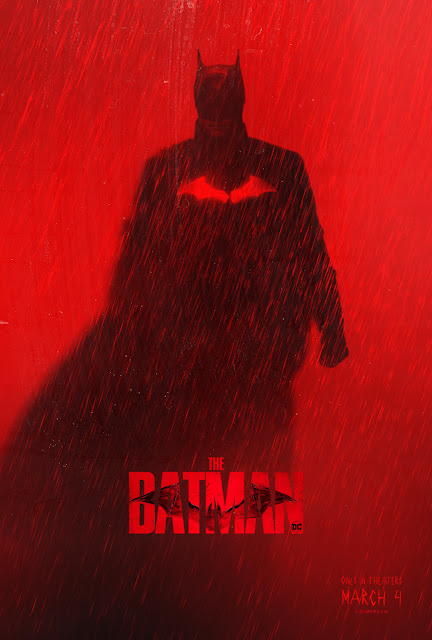
Broodingly swinging into cinemas this past weekend, Matt Reeves' suspense thriller epic The Batman impressively manages to honor previous cinematic iterations of the iconic superhero while also presenting him and his universe in a fashion we've never seen before on the movie screen.  While Christopher Nolan's vaunted Dark Knight trilogy for the most part kept the character grounded in reality there were still fantastical elements to each film - the microwave emitter designed to vaporize the water supply, the citywide network of cellphones rigged up to transmit sonar imagery to Batman's goggles, etc.  But Reeves and his team have taken Nolan's realism-based approach one step further, presenting the story in grimy, believable detail in a manner akin to 1970s crime drama, via a 1990s David Fincher aesthetic.  

The Batman in this universe isn't a superhero at all, but a tortured, vengeance-obsessed vigilante prowling the streets and looking for criminals to punish.  He's inexperienced, only two years into his grand mission to redeem the dysfunctional, corrupt hellscape Gotham has become, and aside from idealistic Lieutenant Jim Gordon (a terse-lipped Jeffrey Wright), he's seen as a freak and a troublemaker by the GCPD.  

But Gordon needs Batman's help more than ever when the police stumble onto a series of grisly murders carried out by another masked "crusader" calling himself The Riddler (Paul Dano in a frighteningly unhinged performance).  The killer is targeting respected public officials and leaving clues specifically for Batman to solve, hoping to catch the attention of the cowled avenger who seemingly inspired him.  The clues lead Batman deep into Gotham's dingy underworld as he investigates possible connections to crime boss Carmine Falcone (a gravel-voiced John Turturro), his deputy Oswald "Penguin" Cobblepot (Colin Farrell, unrecognizable but having the decadent time of his life under all those prosthetics), and a mysterious cat burglar who moonlights as a mafia nightclub hostess (a sultry Zoe Kravitz who conveys intense chemistry with her costumed costar, in the most three-dimensional Selina Kyle cinematic characterization to date).

Friday, September 10, 2021

Top Ten Things: Disappointing Movie Sequels

What up, my nerds?  Welcome to another Top Ten Things, here at Enuffa.com!

Today I'll be talking about a heartbreaking cinematic experience that makes me die inside a little bit and eats away at my very faith in humanity - the disappointing movie sequel.  You've been there; a beloved film classic gets a new chapter, you get all excited in the pants area, you rush out to buy a ticket, you plant yourself in that dark theater, trembling with anticipation, and then.......Two hours later the lights come up and you say, out loud, to no one in particular, "What the absolute fuck did I just watch???"

Then you go home and it hits you: that aforementioned beloved film classic has now and forever been defiled by the ineptly-produced, soul crushing twaddle that followed.  It's like winning the SuperBowl and then crashing your car into a ditch on the way to the after-party.  It's like buying your wife a diamond necklace and then dragging it through the shit-filled drainpipe at the end of Shawshank Redemption.  It's like flying to Paris, visiting the L'Ouvre, and defecating all over the Mona Lisa.  And now you're out ten bucks and bubbling over with resentment.

Okay I might be overstating the emotional effect of these crappy films, but you get where I'm coming from.  Here now are the Top Ten Most Disappointing Movie Sequels (Note: To avoid this piece devolving into a Star Wars/Hobbit/Prometheus-bashing session I have not included any prequels - sequels only).....


10. Mission: Impossible II


Our first entry is the 2000 sequel to the very successful Brian DePalma-directed adaptation of Mission: Impossible, starring Tom Cruise as Ethan Hunt.  Released in 1996, MI was a taut, suspenseful and pretty cerebral update of the TV show, featuring enough action set-pieces to please the summer popcorn crowd but enough character stuff and intricate plot to elevate it above the usual dreck.  I consider it one of the better offerings of that summer.  Fast-forward four years and Tom Cruise was back for the sequel, directed by John Woo and loaded with action and Wachowski-influenced fight scenes.  Problem was the story wasn't very compelling (a scientist develops a bioweapon which is then hijacked by a former colleague of Ethan's who plans to cause a mass infection so he can then sell the antidote at inflated prices), the action owed way too much to The Matrix, the central love triangle was tedious, and the villain (Dougray Scott) was more annoying than menacing.  Also where the first film was very smartly constructed, this one felt dumbed down and full of fan-service moments.  For example, in the first film Ethan uses latex masks to impersonate different people.  These masks are hyper-realistic and make Hunt indistinguishable from the real person.  I'd imagine such a sophisticated disguise would take considerable time to prepare and fabricate, not to mention you'd have to know that the guy you're impersonating is supposed to be in a particular place at a specific time for the ruse to work.  However in the second film, Hunt and Dougray seem to just have masks like this on-hand, ready to wear on the fly.  So clearly this gimmick was only thrown into the movie because it was used in the first one.  Overall I just found MI2 very uninteresting and kind of a generic action film with the MI name slapped on it.  Fortunately a) the series found its footing again with MI:3Ghost Protocol, and beyond (Man does this series have legs), and b) Dougray Scott opted to be in this film instead of playing Wolverine.  We all dodged a bullet there.

Friday, September 3, 2021

Top Ten Things: Superior Movie Sequels

Yo yo yo!  Welcome to another Top Ten Things here at Enuffa.com! 

As a companion piece to my Disappointing Movie Sequels column I thought I'd compile a list of sequels that were actually superior to the original.  It's something that doesn't happen often, but there have been numerous second or third cinematic chapters that have either expanded on or generally outperformed their predecessor. 

**Please note, two common picks you won't see on this list are The Godfather part II and The Empire Strikes Back.  Don't start throwing fruit yet, hear me out.  While both of those films are great, I prefer The Godfather I and A New Hope, respectively, just by a hair.  I can understand why some like the sequels better but I'm not one of those people.**

**Please further note, I also haven't included The Two Towers or Return of the King, as the Lord of the Rings trilogy is really just one extended film.**


So let's get to business....


10. Terminator 2: Judgment Day


James Cameron's 1984 classic The Terminator took Arnold Schwarzenegger's already burgeoning movie career to the next level by casting him as an evil cyborg sent from the future to destroy the mother of his enemy John Connor.  From this simple concept Cameron created a mythic film saga of self-aware machines turning on their creators and laying waste to the entire planet; a concept borrowed for The Matrix series, among others.  Only problem with the first film was the modest budget, which didn't allow Cameron to fully realize the story.  Some of the effects were quite clunky and prevented full audience immersion.  Seven years later he more or less remade the movie but set it during John's childhood, when a second Terminator has been sent to kill him instead of Sarah. 
Unbeknownst to the evil machines, John's future self has reprogrammed one of the original Terminators (played of course by Arnie) to protect little John.  T2 tells a very similar story but expands on it both visually and conceptually.  John's mother Sarah is now a hardened badass who is determined to stop the creation of the network of machines before it ever starts, and she begrudgingly accepts Arnie's help despite her previous traumatic experience at the hands of his predecessor (not unlike Ripley's hangup with androids in Aliens).  As for the new evil Terminator, that one's an upgrade model comprised of liquid metal, who can shapeshift and is nigh indestructible.  This character is the subject of some of the movie's most innovative and expensive special effects, as he morphs from one likeness to another.  The result is a pretty thrilling action movie which, despite basically being a retread, is an improvement on the original at almost every level.  My only two complaints were that Edward Furlong wasn't much of an actor, and I missed Michael Biehn's presence.  Seriously, that guy rules!


9. Bride of Frankenstein


I first saw the original 1931 Frankenstein on the TV show Creature Double Feature when I was probably seven years old, and like most kids I was fascinated by this little film about a man who creates a monster.  It wasn't until years later when I actually read the book that I realized how simplistic the Karloff film was.  So many story threads were tossed out and the moral ambiguity of Frankenstein himself was sort of glossed over in favor of a hero vs. monster scenario.  Yes we somewhat sympathize with the monster, but he's kind of a mindless brute in the film, rather than the eloquent, tragic figure of the novel.  In college I finally watched Bride of Frankenstein, and my original assessment was that it strayed so far from the book and was so unabashedly weird that I hated it.  But upon later viewings I developed an appreciation for the film's uncompromisingly bizarre tone and for how ballsy its anti-religious and sexual undertones were for 1935.  The story is also much more complex and Karloff's monster is completely sympathetic, aided by his newfound ability to speak (Sadly all of his dialogue is monosyllabic and clunky, but you take what you can get).  The performances by Ernest Thesinger as the sinister, rather flamboyant Dr. Pretorious, and Elsa Lanchester as The Bride are also iconic in the pantheon of classic monster films.  The Bride's "birth" is obviously the most film's famous scene; Lanchester based her movements on those of a bird to achieve a sense of otherworldiness.  That this was such a memorable character is even more amazing considering how brief her appearance is.  My only real gripes with Bride of Frankenstein are a) that there was no effort to make the few characters recast from the first film look like the original actors, even though Bride begins immediately after the first movie ends (For example the Burgomeister is now thin and has a mustache and Frankenstein's wife Elizabeth is suddenly waaaaaay hotter), and b) that Frankenstein's lab has a lever in the middle of the room that blows up the entire building.  What might I ask moved him to install such an easily-activated self-destruct mechanism?


Monday, March 22, 2021

Movie Review: Zack Snyder's Justice League


Well, color me surprised, in bleak, muted, desaturated tones.  Zack Snyder somehow managed to snatch an epic four-hour win from the jaws of studio-bungled disaster.  Where Joss Whedon's ill-conceived retooling was stuffed with embarrassing humor, oversaturated colors, cheap-looking costumes, and Henry Cavill's infamous fake upper lip, Zack's mostly original vision is finally here in all its overindulgent glory, a film boasting a surprising amount of heart and goodwill, where we're actually invested in the characters and thus the over-the-top battle scenes feel earned.

Before I get into the details, let me just say that I do not consider myself a Zack Snyder fan.  I liked and respected 300, I loved Watchmen, but I absolutely despised Man of Steel and found Batman v Superman just a clusterfuck of obtuse unpleasantness.  So I'm a control in this experiment.  I'm a skeptic with no dog in this race.  I thought the DCEU was a terrible idea from the start, and the execution entirely backwards; how can you rush to a team-up movie without first establishing the characters you're teaming up?  Why does everything need a shared universe just because it worked for Marvel?  So yeah, I went into this with no emotional investment whatsoever.  

Wednesday, February 10, 2021

Top Ten Things: Film Trilogies

Welcome to yet another Top Ten Things, here at Enuffa.com where I blather on about ten what-have-yous and why I like them.  Today we're back on the topic of movies!

Specifically I'm talking about film trilogies.  The trilogy is one of the most popular narrative forms for the film medium; there's a kind of magic to the sequence of Beginning, Middle and End, which I'm guessing stems from the traditional three-act play structure.  Act 1 sets up the characters, settings and conflicts, Act 2 expands on them and usually puts the protagonists in some kind of danger, and Act 3 resolves everything and hopefully brings the story to a satisfying conclusion.  Understandably the third part of a film trilogy is most often the toughest one to nail.  How do you fully resolve a three-part story arc in a way that ties up all the loose ends and doesn't let down your audience?

For the purposes of this article I've included a couple film series that are no longer trilogies, due to the powers involved opting to make an ill-advised fourth installment.  But in both cases the franchises stood as trilogies for roughly twenty years, having sufficiently wrapped up the story.  Thus I'm including them.

Let's get to it.... 


HM: Back to the Future


One of the most beloved film franchises of the 80s, this time travel action-comedy trilogy is a childhood favorite of, well, just about everyone who grew up in those days.  1985 high school student Marty McFly unwittingly gets transported to 1955 when his eccentric friend, local middle-aged scientist Dr. Emmett Brown invents a time machine car, and after running into his future parents as teenagers, ends up endangering his own existence.  Marty must act as matchmaker to ensure George and Lorraine fall in love, while also working with Dr. Brown's younger self to get back to 1985.  With perfect casting and a brilliantly devised plot, this warmhearted sci-fi adventure was a box office sensation and remains one of the all-time great popcorn movies.  But the story doesn't end there.  In the 1989 sequel Dr. Brown returns to 1985 after a jaunt into the early 21st century to enlist Marty's help in preventing his own children from catastrophic legal woes, and Marty accidentally alters the past when a sports almanac he purchases finds its way into Biff Tannen's hands and he steals the time machine.  The rest of the film involves our heroes returning to 1955 to undo the timeline damage Biff has done, but the time machine is struck by lightning with Doc in it, transporting him to the old west.  The second film is certainly very ambitious and fun to unravel, but falls short of its predecessor, with a few too many plot holes and joke retreads.  The final installment on the other hand played it safe by being essentially a western-infused version of the first film.  Marty travels back to 1885 upon learning that Doc Brown was murdered by an outlaw one week after arriving there, and the two must then devise a plan to get the time machine running so they can return to their rightful era.  The greatness of this trilogy is mostly due to the first film, but both sequels are a ton of fun and help round out the story of an adventurous teenager and a wild-eyed scientist.


10. The Dollars Trilogy


Clint Eastwood became a star and later a cultural icon thanks to the unexpected success of Sergio Leone's triumvirate of unconventional Western films featuring a taciturn, weathered anti-hero with a marksman's aim.  Though A Fistful of DollarsFor a Few Dollars More, and The Good, The Bad & The Ugly weren't intended to be packaged this way, the films' American distributor United Artists marketed them as a trilogy and helped make them a worldwide phenomenon.  Leone's genius in revitalizing the Western can't be overstated; he took what had by the 1960s become an antiquated genre depicting white-hat good guys vs. black-hat bad guys, and added grit, graphic violence, and moral ambiguity, transforming the Western into a much more credible, immersive experience.  These three films center around Eastwood's "Man With No Name" and can be interpreted as a reverse trilogy; the third film takes place during the Civil War, the second in 1872, and the first in 1873.  Eastwood's character goes by different nicknames in each film but in all three he sports his iconic poncho and battered brown hat.  Each film is a definitive Spaghetti Western, but as a three-part unit they're iconic.


9. Star Wars Sequel Trilogy


Yup, I'm gonna take some flak for this and I don't care.  The Star Wars sequel trilogy is one of my favorites.  Where George Lucas's prequels for me failed on virtually every level to recapture the magic of the originals, JJ Abrams, Rian Johnson, Kathleen Kennedy et al understood what made Lucas's original vision so special, so imaginative, and so mesmerizing.  Yes, the three films could've fit together more tightly had the filmmakers planned out an arc more thoroughly.  Yes, the trilogy is sometimes too ambitious for its own good, attempting to cram in too many story beats and MacGuffins.  But it also introduced some of the most compelling characters in the entire saga - the plucky scavenger destined for great things, terrified of her own innate gifts; the heir to Darth Vader, so consumed with his own fanboyishness and entitlement he loses himself to the Dark Side; the ex-Stormtrooper who becomes a reluctant hero; the hotshot ace pilot who learns there's more to being a leader than daredevil heroics.  Not to mention we got to revisit our old favorite characters.  Han went back to smuggling after his son went rogue and his marriage to Leia dissolved.  Leia resumed her role as a respected political leader as the First Order sprang up.  Luke, disillusioned and broken by his failure as Ben Solo's teacher, cut himself off from the Force and went into hiding, only finding his way again after a new student reached out to him.  These films are full of relatable characters and themes, white-knuckle space battles, emotionally charged lightsaber duels, stunning visuals, and a clear good vs. evil conflict.  In other words, they're everything a Star Wars trilogy should be.


8. Captain America


Okay, so this trilogy is actually part of a larger film series, but the three films focusing on Steve Rogers are tied so closely together as a standalone arc, not to mention they unexpectedly served as the strongest part of the Marvel Cinematic Universe, that I had to put them on this list.  If you had told me in 2011 that Marvel would've knocked it out of the park so completely with the Captain America character to the point that he's kinda the best part of The Avengers, I'd have knocked you down and pissed on your shoes.  The first standalone Cap film, set in the 1940s, chronicles Steve Rogers' rise from a skinny, sickly Brooklyn kid to the very first super-soldier who singlehandedly prevented the sinister Hydra organization from destroying the world.  The period setting and quaint, heroic tone reminded me a bit of the Indiana Jones films, and served as a very enjoyable introduction to the Captain America character.  But it was the Russo Brothers-helmed sequel The Winter Soldier that really captured the imagination and made Rogers the most compelling Avenger.  The James Bond-esque second film sees Rogers fending off a Hydra infiltration of SHIELD, involving three super-helicarriers capable of spying on the entire world, while also coming to grips with his best friend Bucky Barnes (thought dead in the first movie) having been brainwashed and turned into a ruthless assassin.  This taut, spellbinding action thriller pushed the boundaries of violence in the MCU but also presented Rogers as an eminently relatable, straightlaced hero (the kind Superman SHOULD have been).  To date this film is the apex of the Marvel series in my opinion.  The third Cap film is no slouch either however.  With the largest scope of any standalone Marvel film, Civil War deals with the aftermath of The Winter Soldier but also both Avengers films, where the US government has decided our superheroes need to be reined in to preserve public safety.  A guilt-ridden Tony Stark agrees, but Steve Rogers balks at the idea, and this conflict builds to a massive battle between the fractured Avengers squad.  Given that the MCU continued after Civil War, the larger story is not over, but this third film served as a thrilling, climactic conclusion to the series within a series.  As of now there are no plans for a fourth Cap film, but the Captain America trilogy has to be considered one of Marvel's best film properties.


7. Planet of the Apes Prequels


The Planet of the Apes prequel trilogy is astonishing to me for multiple reasons.  First, when the series was announced I groaned, being fully convinced this was nothing but an artistically bankrupt money grab.  But as it turned out, Rise of the Planet of the Apes and its two sequels were thoughtful, unusually quiet, character-driven pieces rife with social commentary, and not the bombastic CGI orgies I feared they would be.  Second, the films restored my faith in CG as an effective means of telling a powerful story, via the revelatory central motion-capture performance of Andy Serkis as the series' protagonist Caesar.  Serkis is a force of nature in this role, delivering nuance, pathos and sentiment previously unheard of in a computer-generated character.  Either the Motion Picture Academy needs to start recognizing motion-capture as real acting or they need to introduce it as a new category.  Third, this series bucked an almost universal trend of the third part of a trilogy being unequivocally the weakest entry.  War for the Planet of the Apes is more profound, more emotive, and more engaging than either of its predecessors (no small feat considering what strong films Rise and Dawn are), and ended this cinematic trifecta on a startlingly high note.  The POTA prequels were a wonderful surprise in an industry full of hi-tech predictability.

For a closer look at all three films, click HERE, HERE and HERE.


Wednesday, December 30, 2020

Parents' Night In: Wonder Woman 1984

We're doing things a little differently this episode, with an audio-only review of the new Wonder Woman film, WW84!  Justin and Kelly will give an honest and fair assessment of Patty Jenkins' latest Wonder Woman opus, including our thoughts on the story, the performances by Gal Gadot, Kristen Wiig and Pedro Pascal, the 80s tone that brought us back to the innocence and campiness of the iconic Superman movies, the cartoonish CG effects, the poignant social and political themes that are still relevant in 2020, and more!  Join us for a deep dive into Wonder Woman 1984!


Subscribe to our podcast to stay updated on future episodes, and don't forget to visit Enuffa.com, follow us on Twitter, join us on Facebook!    

Also check out our YouTube channel at www.youtube.com/c/EnuffaDotCom

Disclaimer- Some contents are used for educational purpose under fair use. Copyright Disclaimer Under Section 107 of the Copyright Act 1976, allowance is made for "fair use" for purposes such as criticism, comment, news reporting, teaching, scholarship, and research. Fair use is a use permitted by copyright statute that might otherwise be infringing. Non-profit, educational or personal use tips the balance in favor of fair use.


Monday, August 17, 2020

Parents' Night In #43: Dick Tracy (1990), an Underrated Masterpiece

Justin and Kelly are back to talk about an old-school comic book movie that didn't get enough love, Dick Tracy!  Starring and directed by Warren Beatty, with Madonna, Al Pacino, Glenne Headly, Dick Van Dyke, William Forsythe, and a host of other supporting actors, Dick Tracy was a precursor to modern comic book films like Sin City and 300, using exaggerated makeup effects, colors and sets to create an immersive, living comic strip.  Deemed a box office disappointment at the time, Dick Tracy has nonetheless aged better than its contemporaries in our opinion and remains a visual feast to this day.  We'll talk about the film itself, Madonna as a pop icon, Warren Beatty's prodigious love life, Al Pacino's 90s overacting, and we'll take a deep dive into the expression "You don't know your ass from your elbow."  Join in on the fun!


Please LIKE, SUBSCRIBE and click the NOTIFICATION BELL to stay updated on all our episodes!

You can also listen to a podcast version of this episode at:

Apple Podcasts: https://podcasts.apple.com/us/podcast

...
Google Podcasts: https://www.google.com/podcasts?feed=

...
Spotify: https://open.spotify.com/show/4qPxkRJ

...

Excerpt of "Sooner or Later" from Madonna's album I'm Breathless.

Parody lyrics:

We're gonna show you the time of your life
Justin's the husband and Kelly's the wife
We're watchin' movies and makin' some bad jokes, for you folks, win-win
Like and subscribe to our channel called Parents'......Night......In


Disclaimer- Some contents are used for educational purpose under fair use. Copyright Disclaimer Under Section 107 of the Copyright Act 1976, allowance is made for "fair use" for purposes such as criticism, comment, news reporting, teaching, scholarship, and research. Fair use is a use permitted by copyright statute that might otherwise be infringing. Non-profit, educational or personal use tips the balance in favor of fair use.


We also have official merch available here: http://www.enuffa.com/p/enuffacom-off...

Thanks for reading - subscribe to our mailing list, and follow us on Twitter, MeWe, Mix, Facebook and YouTube!


Friday, May 15, 2020

Parents' Night In #35: Superman (1978), The Movie Review

Kelly & Justin are back to talk about the beloved original epic superhero film, Richard Donner's 1978 classic Superman, starring Christopher Reeve, Margot Kidder, Gene Hackman and Marlon Brando.  Kelly in particular grew up with this film, watching it repeatedly at her grandfather's house and memorizing every moment.  Justin became a fan much later, having grown up with Superman II but never giving the original its due.  But both of us love it now, a throwback to a simpler time when superhero films were still very quaint and the idea of a big-budget blockbuster Superman movie was unheard of.

We'll discuss the making of this film but also its legacy, its sequel, comparisons to recent Superman movies like Superman Returns and Man of Steel, comparisons of Christopher Reeve to Brandon Routh and Henry Cavill, and comic book films as a whole.  So crack open a beer, sit back and join us for this special episode!

Dedicated to John Hartmann (1931-2020), for whom Superman '78 was an all-time favorite.

You can also listen to a podcast version of this episode at

https://www.google.com/podcasts?feed=...

https://podcasts.apple.com/us/podcast...

https://open.spotify.com/show/4qPxkRJ...


Don't forget to LIKE and SUBSCRIBE to our channel and click the NOTIFICATION bell to stay updated on future episodes, and don't forget to subscribe to our mailing list, and follow us on Twitter, MeWe, Mix, Facebook and YouTube!

Wednesday, May 13, 2020

Cinema Showdown: Superman Returns vs. Man of Steel

Originally published in 2015...
Welcome to another edition of Cinema Showdown, here at Enuffa.com, where I'll take two movies that are either based on the same source material, present the same story, or just share many similarities, and see which one stacks up better.


Today I'll be talking about the two most recent cinematic takes on the beloved character of Superman: 2006's Superman Returns, directed by Bryan Singer, and 2013's Man of Steel, from Zack Snyder.


Superman is generally credited with launching the superhero genre of comic books, and is an internationally recognized, mythic embodiment of heroism.  The sole survivor of a doomed alien race, Superman arrived on Earth as a baby and was adopted by simple farmers.  As he grew into adulthood he discovered his super powers and eventually came to understand and accept the inherent responsibility that came with them, embarking on a lifelong crusade to rid the world of evil and protect the people of his adopted home.

These themes were captured beautifully in Richard Donner's 1978 epic Superman: The Movie.  While far from perfect and fraught with production challenges and creative issues, Superman conveyed a sense of wonder and lighthearted optimism in bringing to life this virtuous character, introducing him to a whole generation of filmgoers and creating the superhero movie as we know it.  After three sequels the franchise eventually fizzled, and for nearly twenty years every attempt at a cinematic rebirth for The Man of Tomorrow was aborted prior to production.

Then in 2006 Bryan Singer released Superman Returns, which was presented as a direct sequel to Superman II (1981).  Retroactively nullifying the largely-reviled Superman III and IV, Returns takes place five years after II, whereupon Superman has, well, returned to Earth after a mysterious five-year absence and found that the world didn't necessarily miss him.  At the same time Lex Luthor has been released from prison (largely due to Kal-El being unavailable to testify against him) and hatched a new plan to take over the world using crystals from the Fortress of Solitude.  The plot of this film was eerily similar to that of the 1978 original (Luthor attempts to change the Earth's landscape to create his own priceless real estate, almost certainly at the expense of millions of lives), and while a few of the performances were well-received, the film was a box office disappointment.  Its planned sequel was scrapped, and it was back to the drawing board for The Big Blue Boy Scout.